
Introduction to GCC Drug Registration
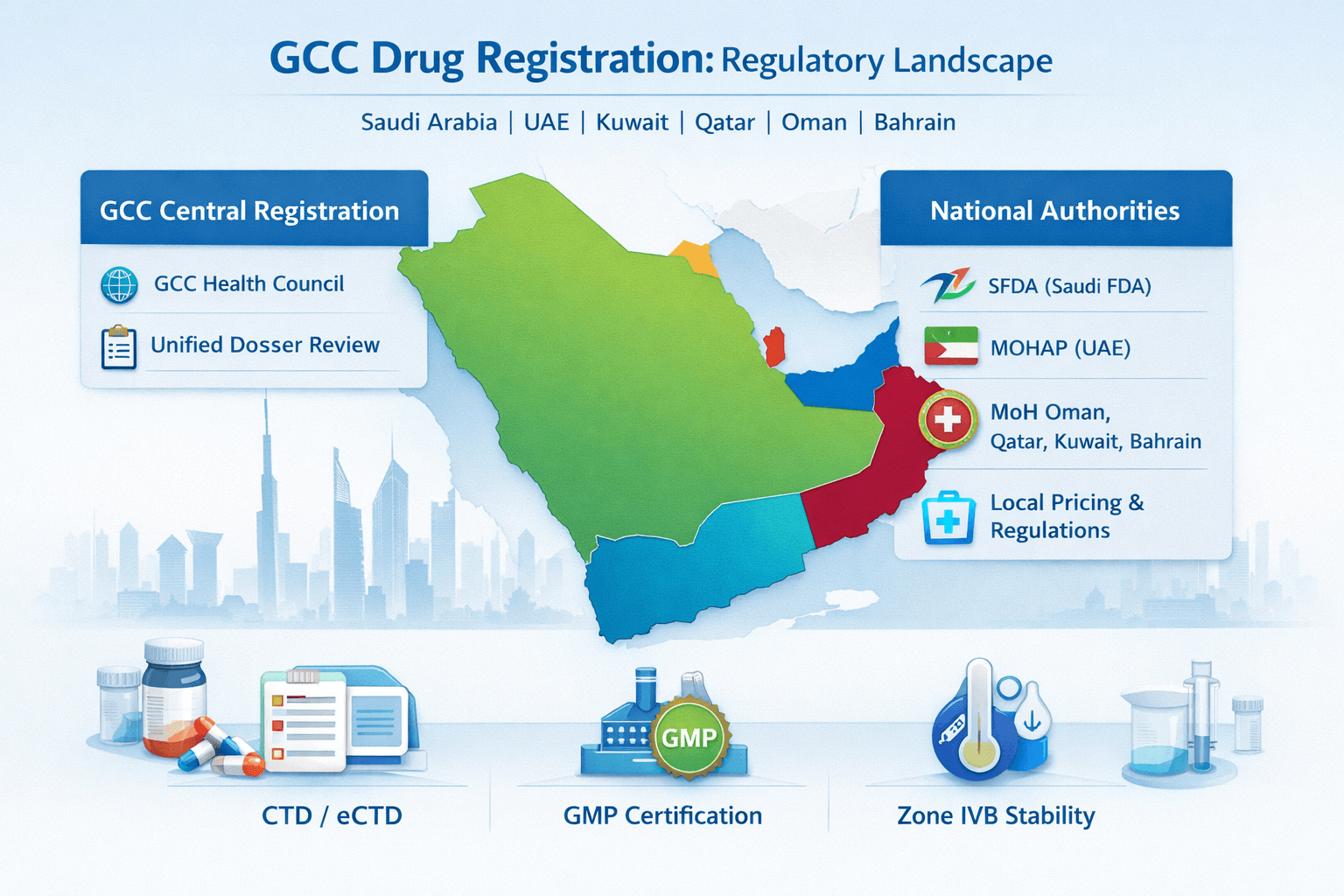
The Gulf Cooperation Council (GCC) — comprising Saudi Arabia, UAE, Kuwait, Qatar, Oman, and Bahrain — represents one of the fastest‑growing pharmaceutical markets worldwide. GCC drug registration is a critical step for companies seeking market access, requiring compliance with diverse regulatory frameworks, dossier requirements, and timelines. This article explores the requirements, timelines, and challenges of GCC pharmaceutical licensing, providing practical insights for sponsors.
Regulatory Landscape: GCC Central vs National Routes
Companies can pursue GCC central registration through the GCC Health Council or opt for national submissions. The centralized route offers multi‑country coverage, while national pathways remain dominant due to country‑specific pricing, tender, and formulary rules.
GCC Drug Registration Requirements
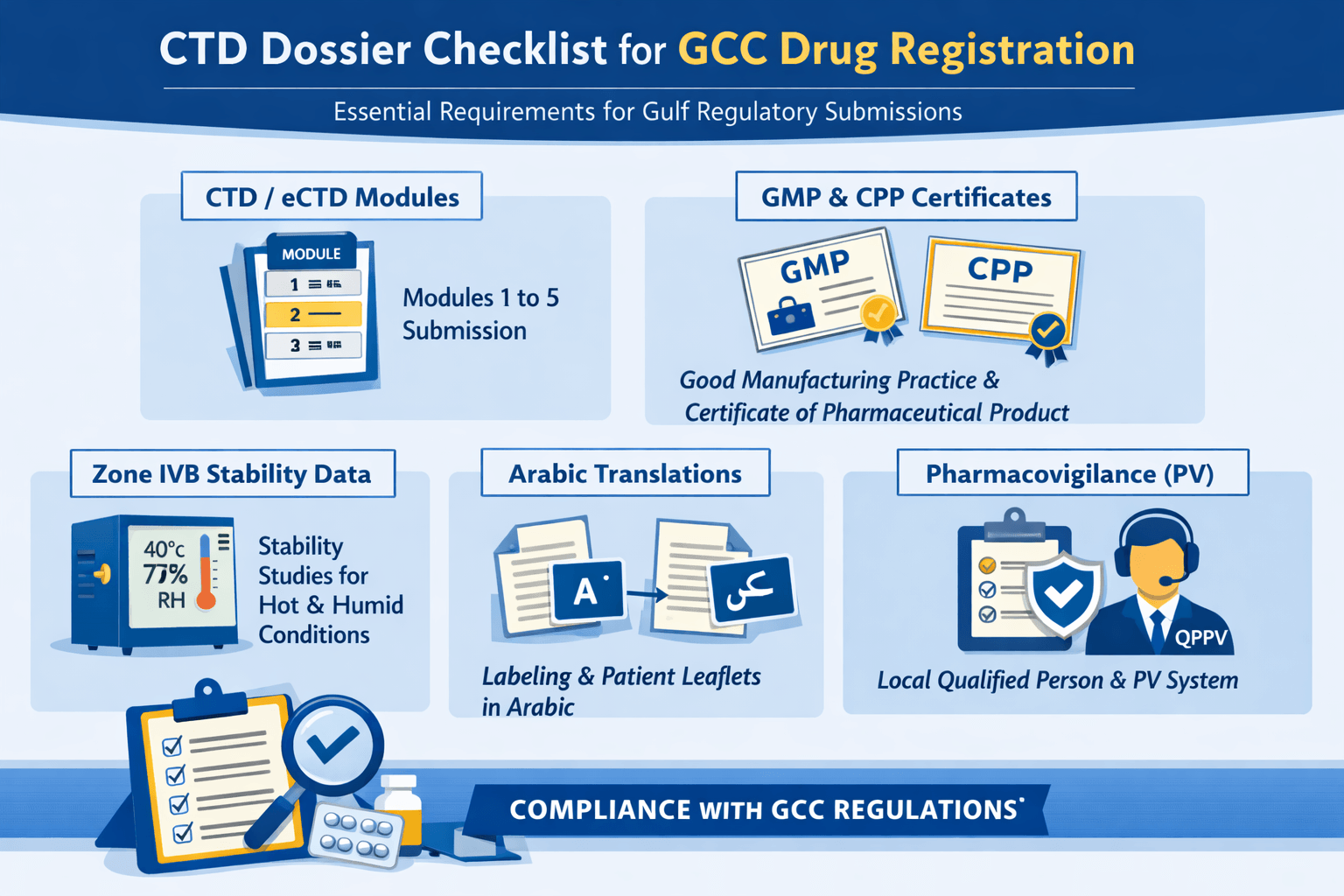
- CTD/eCTD dossier aligned with ICH guidelines.
- GMP certificate and Certificate of Pharmaceutical Product (CPP).
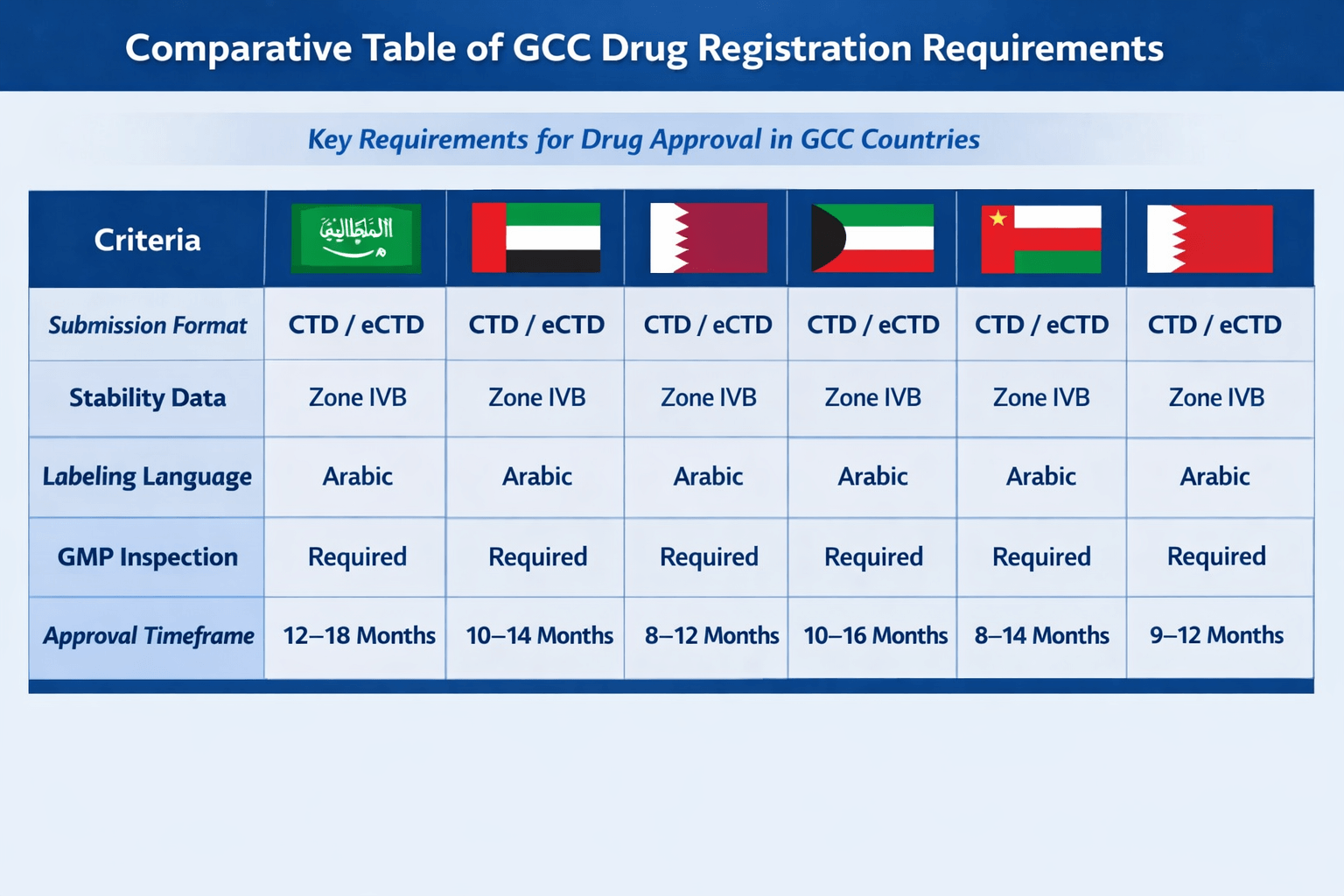
- Zone IVB stability studies for hot/humid climates.
- Arabic translations of labels and patient information leaflets.
- Pharmacovigilance documentation and local QPPV appointment.
Timelines for GCC Pharmaceutical Licensing
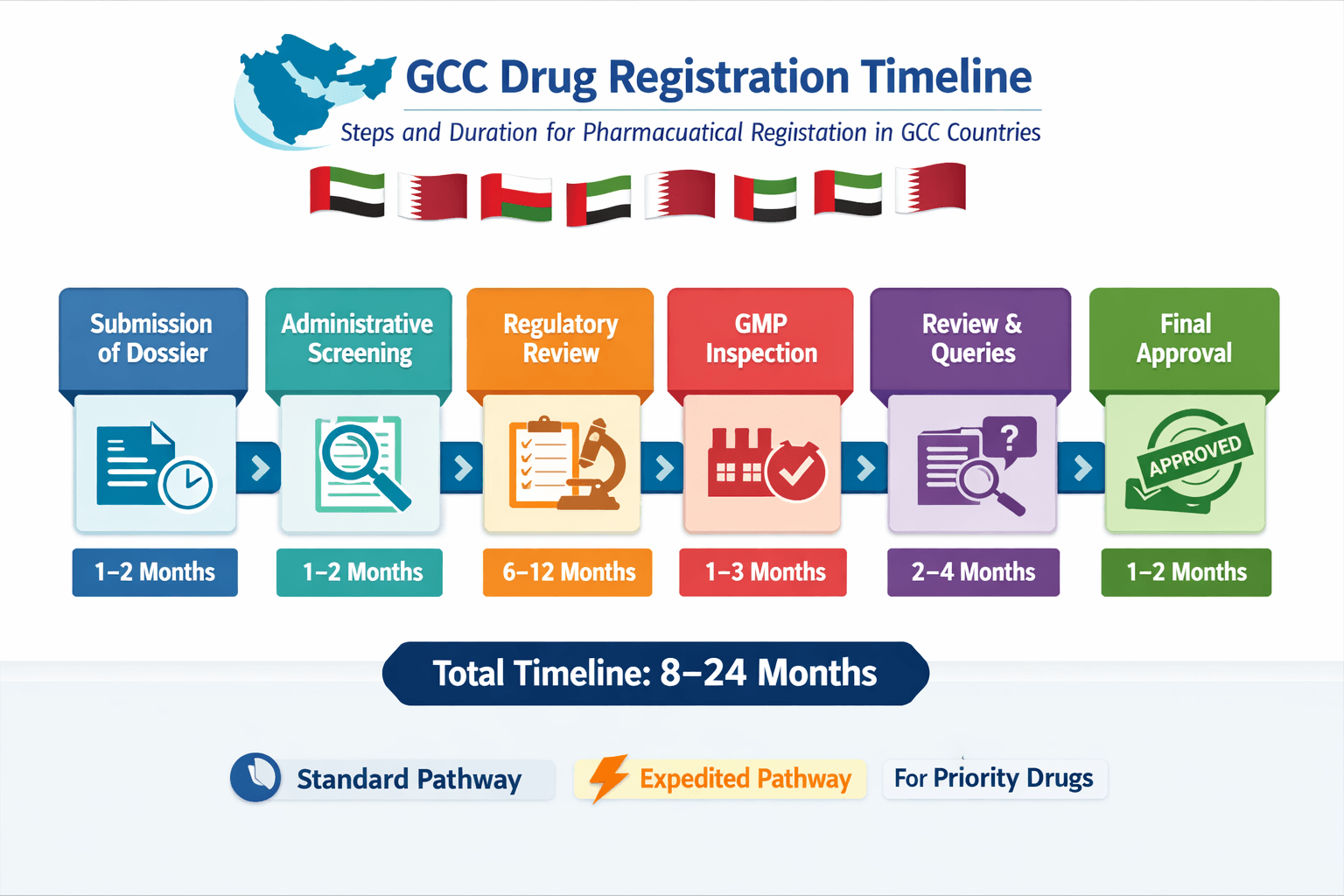
Typical GCC drug registration timelines range from 8–24 months, depending on the route and country. Expedited pathways exist for innovative drugs, orphan medicines, and priority therapies. Sponsors should anticipate administrative checks, scientific reviews, GMP inspections, and deficiency letters.
Challenges in Gulf Drug Approval
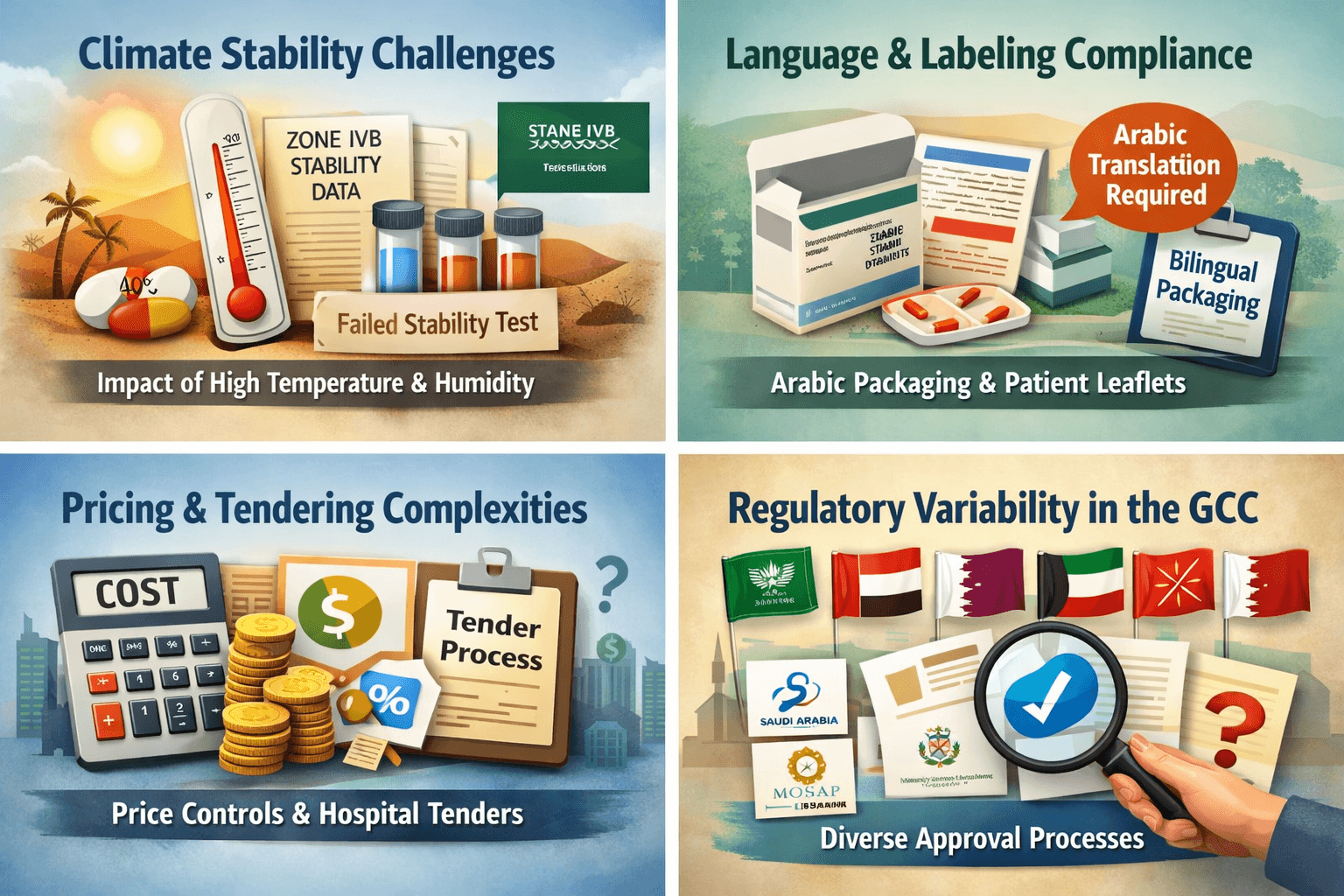
- Climate stability hurdles — Zone IVB failures can delay submissions.
- Language compliance — Arabic labelling and translation requirements.
- Pricing and tender complexities — hospital formulary access varies.
- Variability in review practices — differences across SFDA, MOHAP, and other authorities.
Country-by-Country Deep Dive
Saudi FDA Drug Approval Process
The Saudi Food and Drug Authority (SFDA) requires full CTD/eCTD submissions, GMP inspections, and pricing approvals. Timelines average 12–18 months.
UAE MOHAP Pharmaceutical Registration
The UAE Ministry of Health and Prevention (MOHAP), alongside DHA and DOH, oversees drug approvals. UAE MOHAP pharmaceutical registration emphasizes Arabic labelling and PV compliance.
Oman, Qatar, Kuwait, Bahrain
Each country has its own MOH requirements, with timelines ranging from 8–14 months. Local representation is mandatory.
Best Practices for GCC Medicine Registration
To succeed in GCC drug registration, sponsors should:
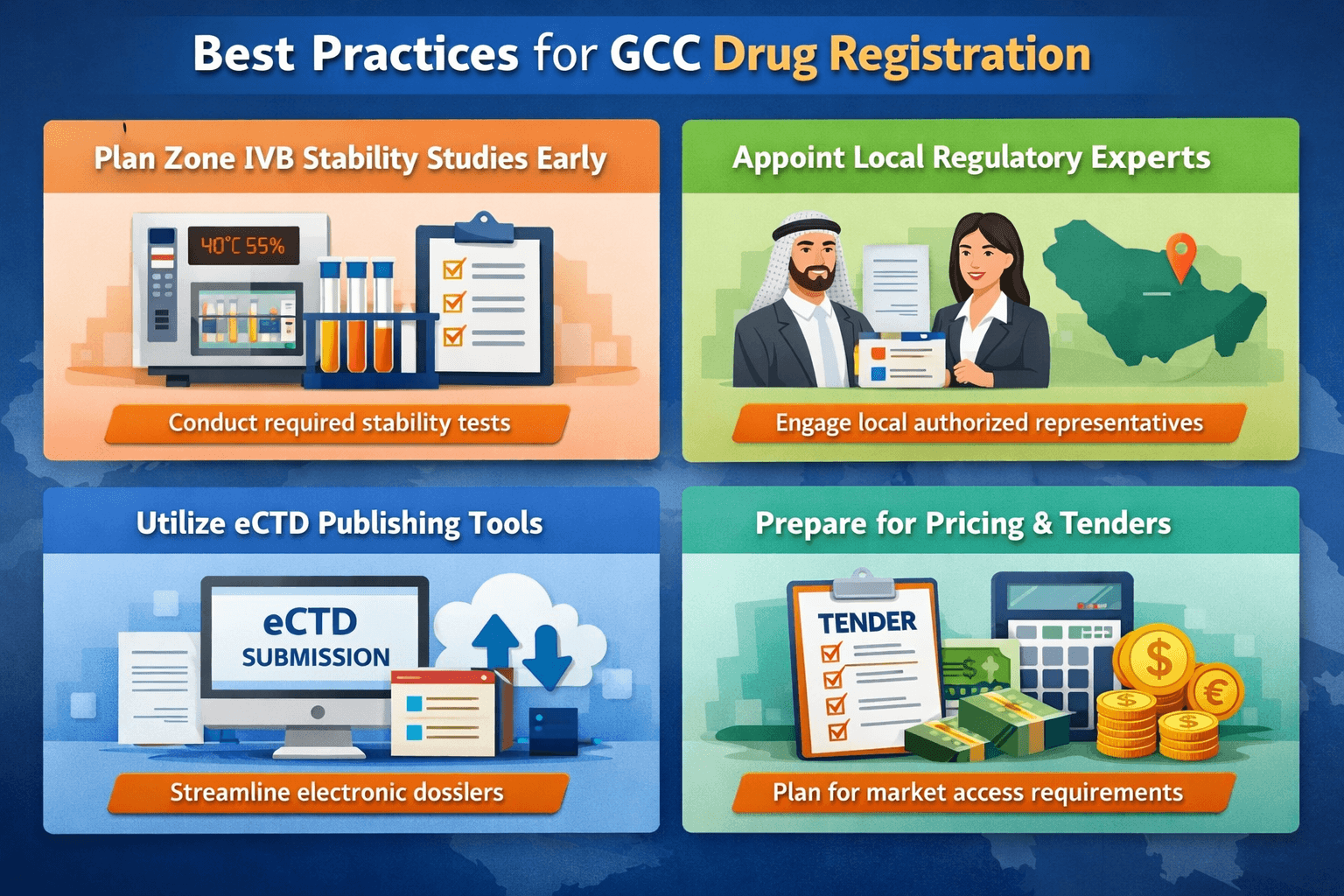
- Plan Zone IVB stability studies early.
- Appoint local authorised representatives and PV contacts.
- Leverage digital publishing systems (Lorenz, EXTEDO, Veeva Vault).
- Prepare for pricing and tender submissions post‑approval.
Future Outlook for GCC Pharma Compliance
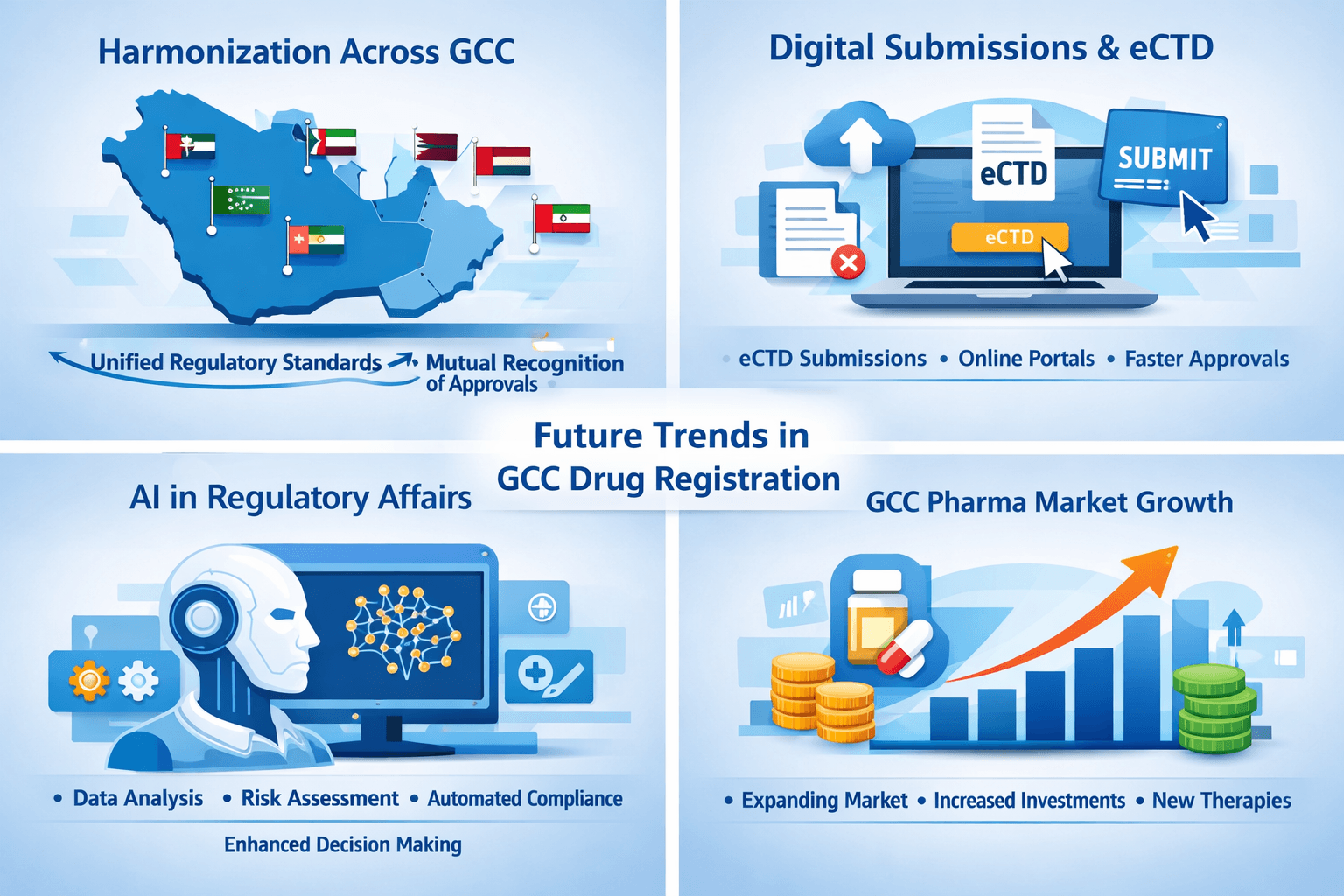
Trends include harmonization across GCC states, digital submissions, and AI‑driven regulatory intelligence. The GCC pharma market is projected to grow significantly, making GCC drug registration a strategic priority for global companies.
Conclusion
GCC drug registration requires strategic planning, robust documentation, and local expertise. Companies that anticipate challenges and leverage regulatory intelligence can achieve faster approvals and sustainable market success.
References
- GCC Health Council
- Saudi Food and Drug Authority (SFDA)
- UAE MOHAP
- WHO CTD Guidelines
- ICH Guidelines
- IQVIA GCC Pharma Market Report
- Deloitte GCC Healthcare Outlook
- PwC Middle East Pharma Insights
- PubMed: “Drug Regulation in GCC”
- GCC Central Registration Guide – GCC Health Council
