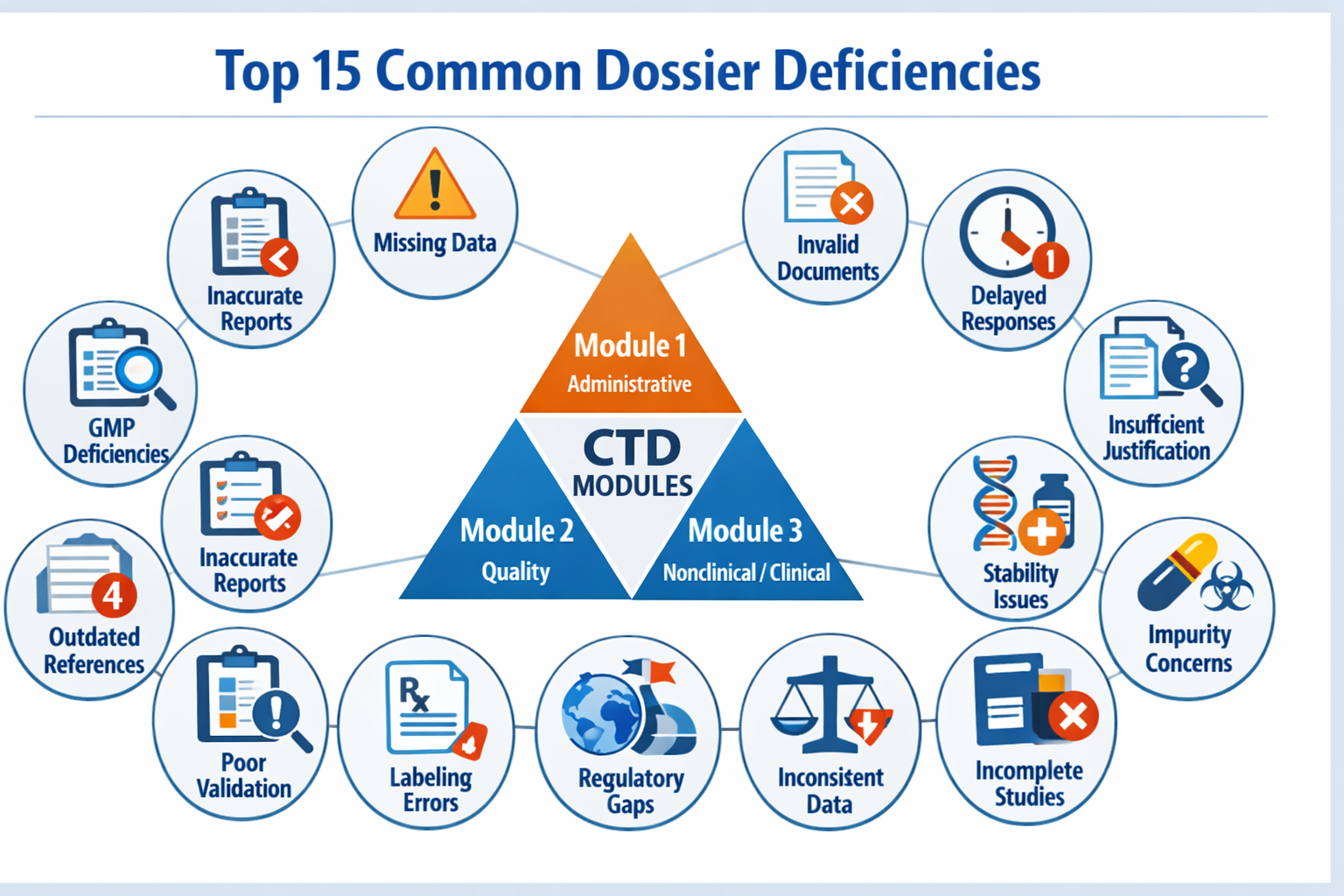
Top 15 deficiencies across CTD modules

Regulatory dossier submissions are the single most critical step in securing market authorization for a pharmaceutical product. However, a staggering number of applications encounter delays – or outright rejection – not because of a product’s safety or efficacy, but because of avoidable common dossier deficiencies. Therefore, recognizing the top 15 common deficiencies found during regulatory dossier review is the first step toward a smooth, first‑cycle approval. This article draws on current ICH, ASEAN, FDA, and EMA expectations12 to help you identify and eliminate these pitfalls before they derail your submission.

Why Common Dossier Deficiencies Delay Market Access

Every query raised by a health authority consumes time, resources, and sometimes the entire filing window. Specifically, regulatory agency data consistently show that over 60% of initial CTD/ACTD applications receive deficiency letters, with many queries rooted in the same recurring common dossier deficiencies.3 Consequently, when you understand these mistakes, you shift from a reactive firefighting mode to a proactive, right‑first‑time submission strategy.

Moreover, a single oversight in Module 3’s stability data or an incomplete administrative form can trigger a clock‑stop, eroding patent life and costing sponsors millions. The ICH M4 guideline, the ASEAN Common Technical Dossier (ACTD) format, and regional directives all underscore that completeness, consistency, and clarity are non‑negotiable.14

Common Dossier Deficiencies: An Overview of the Top 15

Below are the 15 most frequent deficiencies identified during regulatory dossier reviews globally. They span all CTD modules and apply equally to the ACTD, eCTD, and paper‑based submissions. In addition, for each entry you’ll find the specific regulatory concern, the impacted module, and actionable advice.

Summary Table of Top 15 Common Dossier Deficiencies

DeficiencyModule Most Affected              Consequence
1. Incomplete or outdated administrative formsModule 1Immediate rejection or request for amendment
2. Mismatch between product information and supporting dataModule 1, 2Confusion, additional queries, delayed approval
3. Lack of proper CTD structure and navigationAll ModulesRejection due to format non‑compliance
4. Inadequate drug substance characterizationModule 3Major deficiency, often requiring new studies
5. Missing or insufficient specification justificationsModule 3Unacceptable quality control, clock‑stop
6. Stability data that does not cover proposed shelf‑lifeModule 3Shorter shelf‑life granted or full rejection
7. Incomplete process validation dataModule 3Manufacturing site not approved
8. Missing bioequivalence or clinical bridging dataModule 5Refusal to accept generic/hybrid application
9. Inconsistent batch numbering across modulesModule 3, 4, 5Data integrity concerns, full audit
10. Unclear risk assessment for impuritiesModule 3Safety concerns, request for further tox data
11. Outdated or non‑ICH compliant nonclinical studiesModule 4Full rejection of nonclinical package
12. Deficient clinical overviews lacking critical analysisModule 2Misinterpretation of benefit‑risk, refusal
13. Failure to address regional regulatory specifics (e.g., ACTD vs CTD)Module 1, AllOutright rejection in ASEAN, GCC markets
14. Inaccurate or missing GMP certificatesModule 1Manufacturing authorization denied
15. Poor cross‑referencing between modules and appendicesAllLengthy review cycles, multiple deficiency rounds

A Common Dossier Deficiency: Incomplete or Incorrect Administrative Forms

Module 1 is the face of your application. Yet reviewers frequently encounter outdated application forms, missing signatures, incorrect product names, or wrong dosage form codes. For instance, in ACTD submissions for ASEAN, a common dossier deficiency is using a CTD Module 1 template instead of the specific ASEAN variation.4 Similarly, in the EU, missing the electronic application form (eAF) or providing inconsistent contact details triggers immediate rejection.2

How to avoid it: Always download the latest form directly from the authority’s website on the day of submission. Then, cross‑check every field against the dossier content. A regulatory consulting team like Pharma Actd Dossiers can perform a granular administrative pre‑review to catch these simple but fatal errors.

Mismatch Between Product Information and Supporting Data

The SmPC, package insert, and labeling must be precisely mirrored in Modules 3, 4, and 5. Specifically, a difference in the stated strength, storage condition, or therapeutic indication between the product information and the corresponding quality or clinical data is a top‑5 deficiency.5

Preventive measure: After dossier compilation, conduct a line‑by‑line reconciliation of product information text against every summary, table, and study report. Additionally, use a traceability matrix.

Structural and Navigational CTD Non‑Compliance

A dossier that does not follow the ICH M4 Granularity Document or the specific eCTD backbone is administratively incomplete. For example, missing bookmarks, hyperlinks, or a consistent table of contents are common dossier deficiencies.1 Meanwhile, in ASEAN, submissions not adhering to the ACTD organizational structure (Part I, II, III, IV) are returned.4 The FDA’s refusal‑to‑file (RTF) statistics frequently cite poor navigability.

Checklist item: Validate the dossier with an eCTD viewer before submission. Then ensure all headings match the authority’s required table of contents exactly.

Inadequate Drug Substance Characterization

Under Module 3.2.S, elucidation of structure, isomerism, polymorphic forms, and particle size distribution is essential. However, regulators often see missing data on potential genotoxic impurities, insufficient characterization of starting materials, or a lack of discussion on stereochemistry.6 As a result, FDA and EMA regularly issue major deficiency letters when critical physicochemical properties are not fully described.

Solution: Perform a gap analysis against ICH Q6A, Q3A, and Q3B. Moreover, include decision trees that justify why certain tests were not performed.

Missing or Unjustified Specifications

Setting acceptance criteria without linking them to batch data, stability results, and clinical experience is a frequent Module 3 deficiency. For instance, a dissolution specification of Q=80% at 30 minutes must be justified with a dissolution profile comparison and in vivo relevance.7 In addition, health authorities such as CDSCO and EMA demand explicit justification for every specification parameter.

Pro tip: Include a specification justification table that maps each limit to a regulatory guideline, development data, or pharmacopoeial monograph.

Stability Data That Does Not Support the Proposed Shelf Life

One of the most severe common dossier deficiencies is proposing a 24‑month shelf life with only 12 months of long‑term data and no adequate intermediate or accelerated extrapolation. However, ICH Q1E requires that extrapolation be scientifically sound.8 Likewise, ASEAN ACTD guidelines demand at least 12 months of long‑term data at the time of filing for a 24‑month shelf life, with a commitment to continue studies.4

Action: Always present stability commitment protocols and complete statistical analysis. Therefore, if extrapolating, provide a robust justification as per ICH Q1E.

Incomplete Process Validation Data

Module 3.2.P.3 must demonstrate that the commercial manufacturing process is under control. Consequently, missing or incomplete process validation protocols, lack of critical process parameter identification, or absence of hold‑time studies are common queries.9 Specifically, for sterile products, insufficient media fill data is a critical deficiency leading to rejection of the site.

Best practice: Include a comprehensive process validation master plan and, where available, full validation reports for three consecutive commercial‑scale batches.

Missing Bioequivalence or Clinical Bridging Data

For generics and hybrid applications, failure to provide a complete bioequivalence study report with statistical analysis is a top reason for refusal.10 Additionally, when a product differs from the reference in excipients, missing data on comparative dissolution in multiple media under Module 3.2.P.2 creates a deficiency chain. Moreover, ASEAN authorities under the ACTD consistently query the lack of a biowaiver justification if a BE study is not conducted.

Key deliverable: Include the full BE study report, randomisation code, analytical method validation, and supporting comparative dissolution data across at least three media (pH 1.2, 4.5, 6.8).

Inconsistent Batch Numbering and Traceability

Data integrity is paramount. In fact, if the batch numbers used in the development pharmaceutics section do not match those in stability studies or clinical batches, regulators lose confidence. For example, a typical deficiency states, “The batch number referenced in the dissolution method validation (Module 3.2.P.5) cannot be traced back to the manufacturing process development section.”

Remediation: Create a batch genealogy table that clearly shows which batch was used for each study and confirm it aligns across all modules.

Unclear or Non‑Compliant Impurity Risk Assessment

ICH M7, Q3A, and Q3B require a rigorous risk assessment for actual and potential impurities. Meanwhile, missing a discussion on elemental impurities (ICH Q3D) or nitrosamines (as per EMA/FDA guidance) is now one of the fastest ways to receive a major deficiency.1112

Checklist: Include a nitrosamine risk assessment report, elemental impurity risk assessment, and justification for specified/unspecified impurity limits based on toxicology data or TTC.

Outdated or Non‑ICH Compliant Nonclinical Studies

Module 4 must demonstrate GLP compliance and adherence to ICH S guidelines. However, many submissions from emerging markets contain repeat‑dose toxicity studies that do not follow the ICH M3(R2) timelines or lack proper TK data.13 As a result, an unvalidated bioanalytical method in a pivotal tox study is an instant rejection point.

Review protocol: Map every nonclinical study to the relevant ICH safety guideline and provide a GLP compliance statement for each.

Deficient Clinical Overviews Lacking Critical Analysis

Module 2.5 and 2.7 require more than a simple listing of studies. In fact, a poor clinical overview that fails to present a critical benefit‑risk evaluation, omits discussion of safety signals, or does not address the data in the context of the targeted patient population is a common deficiency.14 Consequently, EMA assessment reports often criticize the lack of a meaningful integrated efficacy and safety summary.

Enhancement: Ensure the clinical overview is written by a qualified medical writer and includes a structured benefit‑risk assessment using the FDA’s Benefit‑Risk Framework or EMA’s tool.

Failure to Address Regional Regulatory Specifics

Submitting a pure ICH CTD to an ASEAN country that requires the ACTD format is a fatal mistake. Likewise, the same applies to GCC, where country‑specific requirements for Module 1 (e.g., legalized GMP certificates, pricing certificates) are non‑negotiable.4 Furthermore, in India, CDSCO expects specific appendices like a complete drug master file copy.

Regional intelligence: Always consult the latest country‑specific guidelines. Pharma Actd Dossiers specializes in bridging the gap between global CTD content and regional ASEAN/ACTD requirements, ensuring that every local nuance is satisfied before submission.

Inaccurate or Missing GMP Certificates

Module 1 must contain valid, current GMP certificates for all manufacturing and testing sites. Specifically, a certificate that has expired by even one day, or is not appropriately apostilled/legalized for the target country, will halt the review.2 Similarly, for EMA, a missing manufacturing authorization or an incorrect EU GMP certificate number is a ground for validation refusal.

Control: Implement a certificate tracker with expiry dates and legalization status for every market.

Poor Cross‑Referencing Between Modules

A dossier that forces the reviewer to search for information creates frustration and delays. For instance, inconsistent table references, missing appendix identifiers, or vague statements like “refer to the clinical study report” without specifying exact sections are frequent issues. Therefore, the ICH eCTD specification mandates detailed hyperlinking and unique document identifiers.1

Fix: Use the authority’s suggested table of contents and populate all section titles exactly. Then, cross‑check every internal reference and hyperlink using an automated validation tool.

How to Proactively Eliminate Common Dossier Deficiencies

Avoiding common dossier deficiencies requires a structured quality control approach:

  • Pre‑submission gap analysis against the specific regulatory checklist (FDA CTD checklist, EMA validation checklist, or ACTD compliance guide).
  • Internal peer review by a team not involved in authoring the dossier.
  • Use of regulatory intelligence tools to stay updated on new requirements (e.g., nitrosamines, elemental impurities, e‑labeling).
  • Mock review simulating an agency assessment.
  • Partner with specialized consultants – a firm like Pharma Actd Dossiers can act as an independent reviewer, applying a fresh, authority‑like lens to your submission.

Conclusion

The common dossier deficiencies outlined above are largely preventable. In summary, they stem from incomplete data, format errors, and failure to interpret guidelines correctly. Therefore, by understanding each deficiency and implementing a rigorous pre‑submission checklist, you protect your product’s timeline and budget. Ultimately, whether you are filing in a stringent regulatory market or navigating the ACTD for ASEAN, a right‑first‑time submission is always the goal.

Moreover, when the stakes are high, partnering with experts can make the difference between a query‑free approval and a costly rejection. At Pharma Actd Dossiers (visit www.pharmaactddossiers.com), we specialize in identifying and resolving common dossier deficiencies before they become regulatory roadblocks. Contact us today to ensure your next submission is your smoothest one yet.

Frequently Asked Questions

1. What are the most common CTD dossier deficiencies?
The most common CTD deficiencies include incomplete Module 1 forms, poor cross‑referencing, insufficient stability data, missing impurity risk assessments, and non‑compliant product information. Indeed, these mirror the top common dossier deficiencies listed above.
2. How can I check if my dossier is ready for submission?
Use a regulatory submission checklist aligned with the target authority (e.g., FDA’s Module 1 checklist, EMA’s eCTD validation criteria, or ASEAN ACTD compliance list). Additionally, a mock review or independent gap analysis by regulatory professionals is highly recommended.
3. What is the difference between CTD and ACTD deficiencies?
While scientific and quality data expectations are similar, ACTD deficiencies often arise from not following the ASEAN‑specific structure (Part I‑IV), lacking local administrative documents, or failing to meet ASEAN stability zone requirements (Zone IVb). On the other hand, CTD submissions in ICH regions have more stringent electronic formatting and hyperlinking requirements.
4. Can a minor deficiency lead to full dossier rejection?
Yes. In fact, multiple minor deficiencies in administrative sections can lead to a refusal to file. Even worse, a single major deficiency, such as incomplete stability data or missing GMP certificates, can result in a clock‑stop or rejection.
5. How do I fix a deficiency after receiving a query?
Respond point‑by‑point in a clear table, provide the updated documents with tracked changes, and explain the impact on other sections. Most importantly, timeliness is critical; always meet the authority’s response deadline to avoid automatic withdrawal.
6. Are ACTD submissions reviewed differently from CTD submissions?
The scientific review is comparable, however, ACTD requires paper or electronic submission in a specific binder structure. Consequently, reviewers in ASEAN countries place high importance on administrative completeness, local legalized documents, and compliance with country‑specific product registration requirements.
7. How often do deficiency trends change?
Deficiency trends evolve as new guidelines emerge (e.g., nitrosamine evaluation, elemental impurities, e‑labeling). Therefore, it is vital to monitor updates from ICH, WHO, FDA, EMA, and regional bodies regularly.

Real‑World References

  1. ICH M4 (R4) Guideline – Common Technical Document for the Registration of Pharmaceuticals for Human Use. International Council for Harmonisation.
  2. EMA Pre‑submission Guidance for Applicants. European Medicines Agency.
  3. FDA Center for Drug Evaluation and Research. Refuse to File: NDA and BLA Submissions (Guidance for Industry). 2017.
  4. ASEAN Common Technical Dossier (ACTD) for the Registration of Pharmaceuticals for Human Use. ASEAN Secretariat.
  5. EMA/CHMP. Notice to Applicants – Volume 2A: Procedures for Marketing Authorisation. Chapter 7.
  6. ICH Q6A – Specifications: Test Procedures and Acceptance Criteria for New Drug Substances and New Drug Products.
  7. FDA Guidance: Dissolution Testing of Immediate Release Solid Oral Dosage Forms.
  8. ICH Q1E – Evaluation of Stability Data.
  9. ICH Q7 – Good Manufacturing Practice Guide for Active Pharmaceutical Ingredients and regional process validation guidance (e.g., FDA 2011 Process Validation Guideline).
  10. FDA Guidance: Bioequivalence Studies with Pharmacokinetic Endpoints for Drugs Submitted Under an ANDA.
  11. EMA/CMDh – Nitrosamine impurities guidance (EMA/CMDh/410827/2020) and FDA Guidance Control of Nitrosamine Impurities in Human Drugs (2021).
  12. ICH M7 – Assessment and Control of DNA Reactive (Mutagenic) Impurities in Pharmaceuticals; ICH Q3D – Guideline for Elemental Impurities.
  13. ICH M3(R2) – Guidance on Nonclinical Safety Studies for the Conduct of Human Clinical Trials and related ICH S guidelines.
  14. ICH E3 – Structure and Content of Clinical Study Reports; EMA/CHMP Guideline on the Clinical Overview.

Additional Resources & Related Services

Disclaimer: This article is for informational purposes only and does not constitute regulatory advice. Always refer to the official guidelines and consult with qualified regulatory professionals.
GCC Regulatory Map

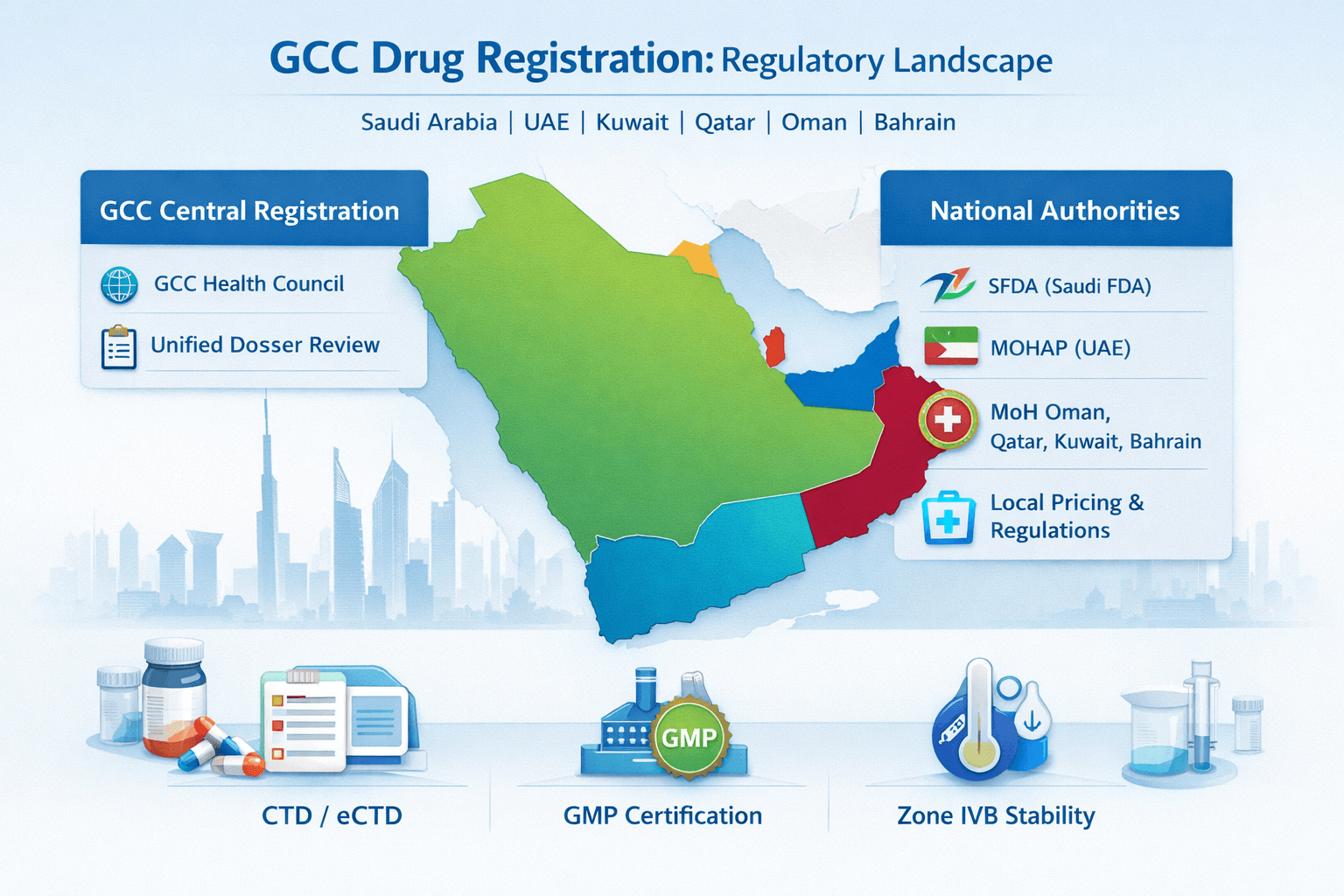
GCC Regulatory Map

Introduction to GCC Drug Registration

The Gulf Cooperation Council (GCC) — comprising Saudi Arabia, UAE, Kuwait, Qatar, Oman, and Bahrain — represents one of the fastest‑growing pharmaceutical markets worldwide. GCC drug registration is a critical step for companies seeking market access, requiring compliance with diverse regulatory frameworks, dossier requirements, and timelines. This article explores the requirements, timelines, and challenges of GCC pharmaceutical licensing, providing practical insights for sponsors.

Regulatory Landscape: GCC Central vs National Routes

Companies can pursue GCC central registration through the GCC Health Council or opt for national submissions. The centralized route offers multi‑country coverage, while national pathways remain dominant due to country‑specific pricing, tender, and formulary rules.

GCC Drug Registration Requirements

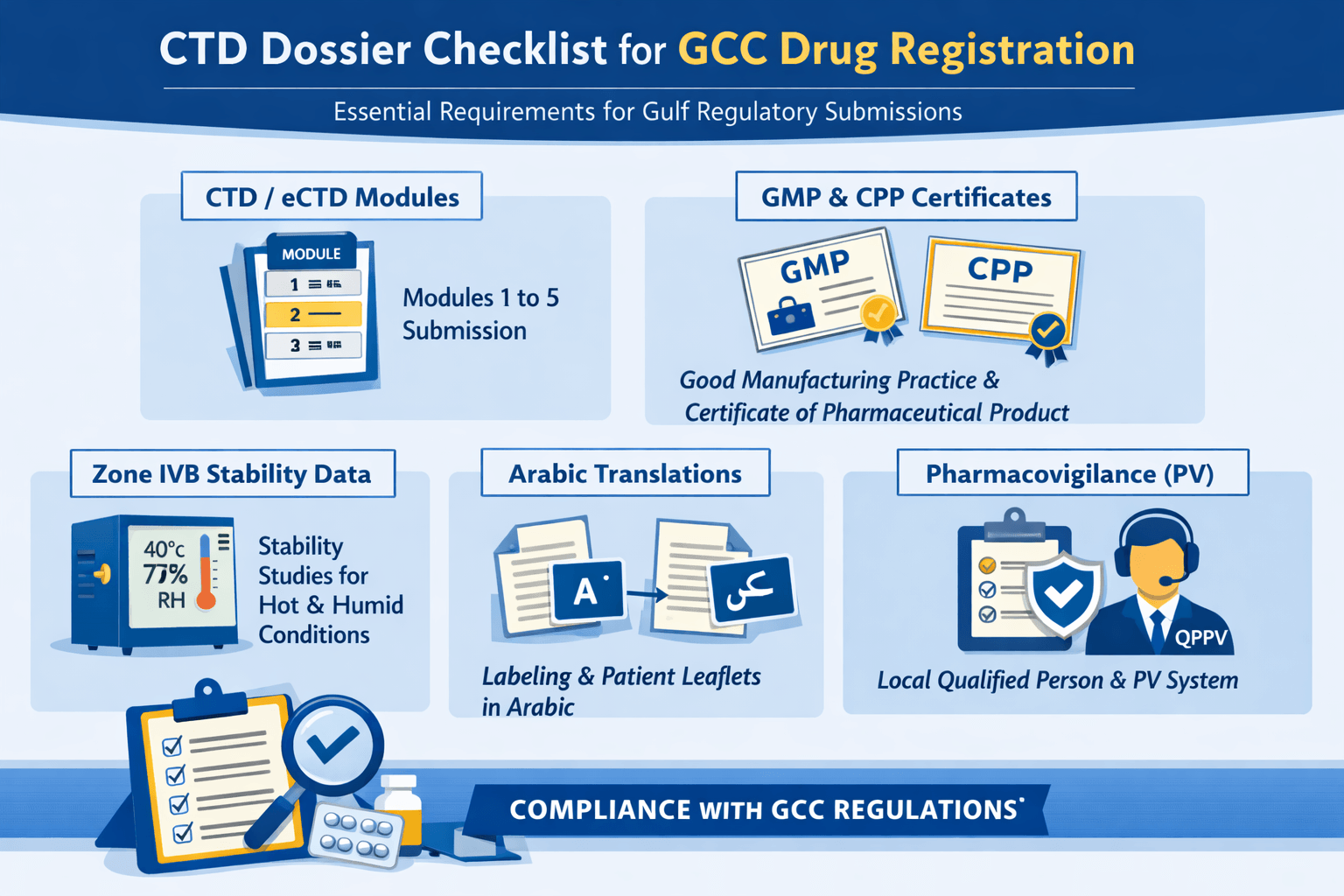
  • CTD/eCTD dossier aligned with ICH guidelines.
  • GMP certificate and Certificate of Pharmaceutical Product (CPP).
  • Zone IVB stability studies for hot/humid climates.
  • Arabic translations of labels and patient information leaflets.
  • Pharmacovigilance documentation and local QPPV appointment.

CTD Dossier Checklist

Timelines for GCC Pharmaceutical Licensing

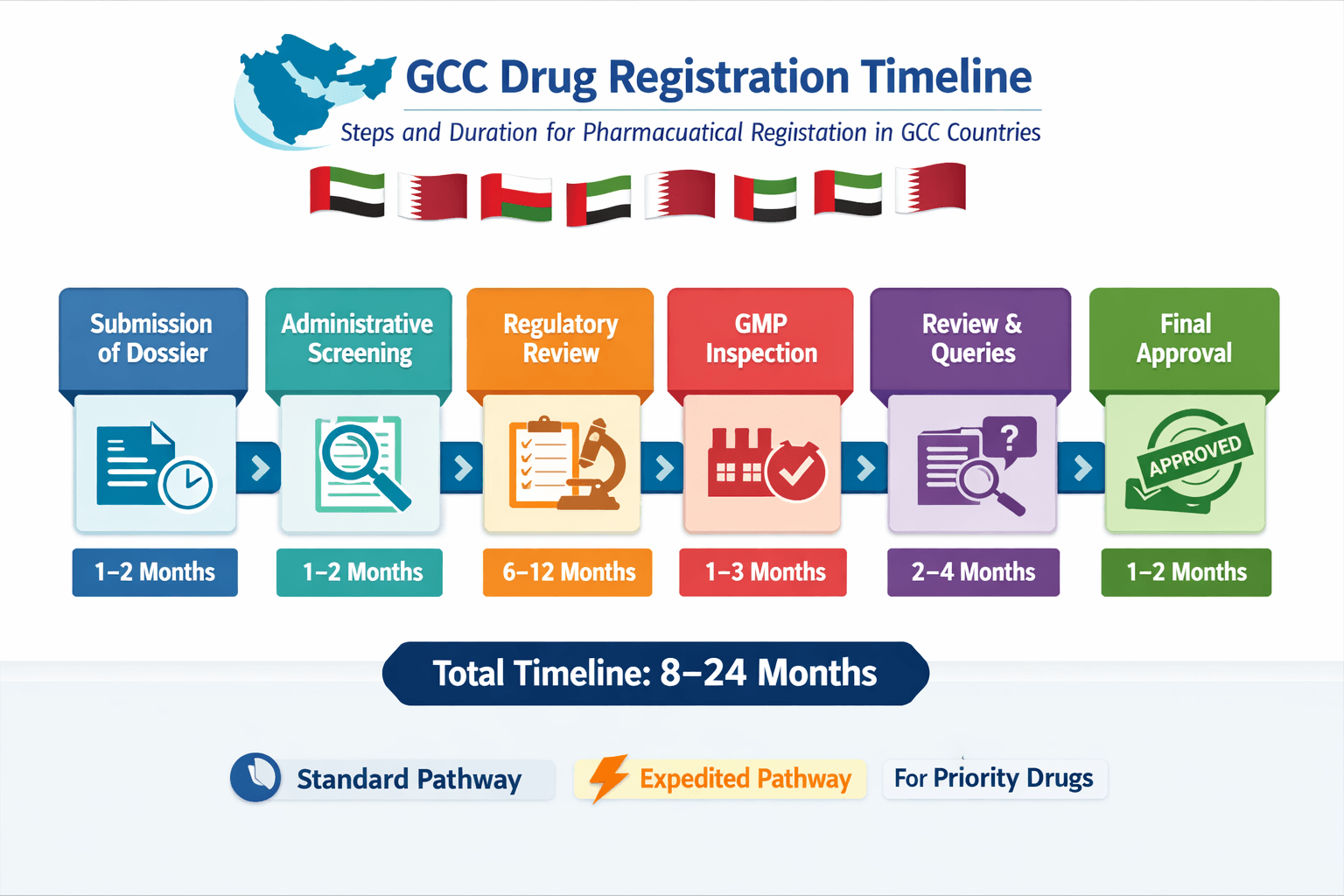
Typical GCC drug registration timelines range from 8–24 months, depending on the route and country. Expedited pathways exist for innovative drugs, orphan medicines, and priority therapies. Sponsors should anticipate administrative checks, scientific reviews, GMP inspections, and deficiency letters.

Drug Registration Timeline Flowchart

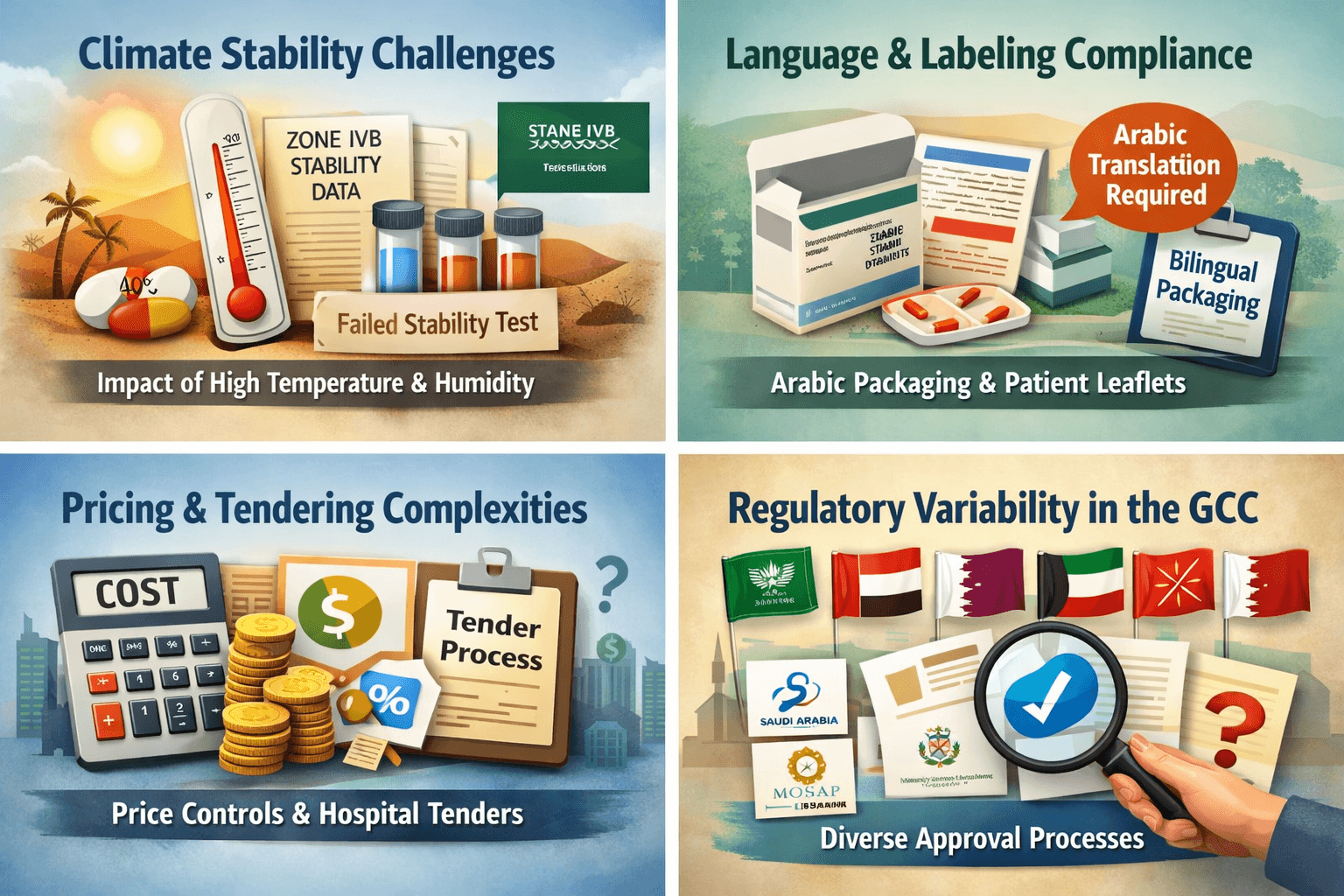
Challenges in Gulf Drug Approval

  • Climate stability hurdles — Zone IVB failures can delay submissions.
  • Language compliance — Arabic labelling and translation requirements.
  • Pricing and tender complexities — hospital formulary access varies.
  • Variability in review practices — differences across SFDA, MOHAP, and other authorities.

Challenges in GCC Pharma Compliance

Country-by-Country Deep Dive

Saudi FDA Drug Approval Process

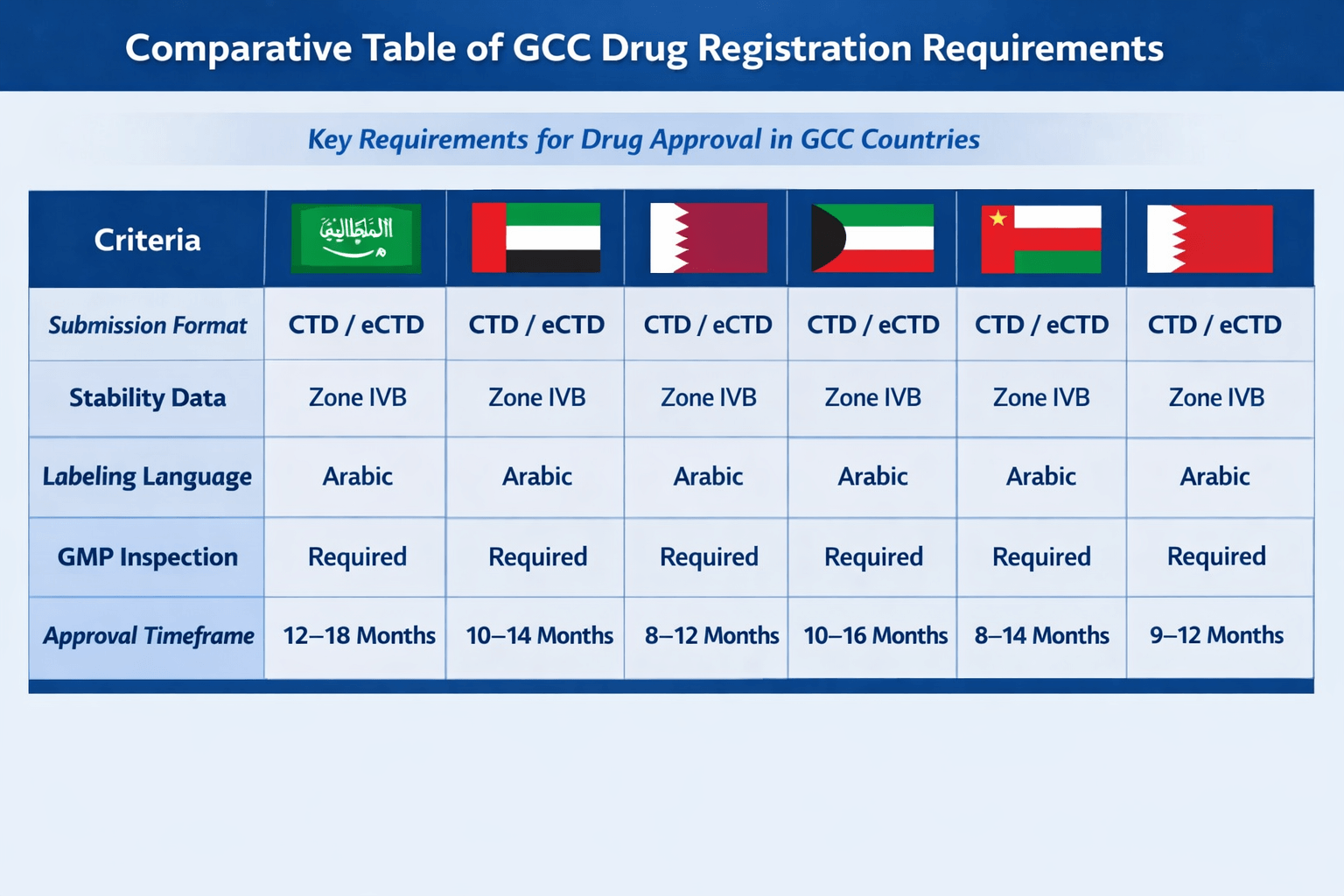
The Saudi Food and Drug Authority (SFDA) requires full CTD/eCTD submissions, GMP inspections, and pricing approvals. Timelines average 12–18 months.

UAE MOHAP Pharmaceutical Registration

The UAE Ministry of Health and Prevention (MOHAP), alongside DHA and DOH, oversees drug approvals. UAE MOHAP pharmaceutical registration emphasizes Arabic labelling and PV compliance.

Oman, Qatar, Kuwait, Bahrain

Each country has its own MOH requirements, with timelines ranging from 8–14 months. Local representation is mandatory.

Comparative Table of GCC Requirements

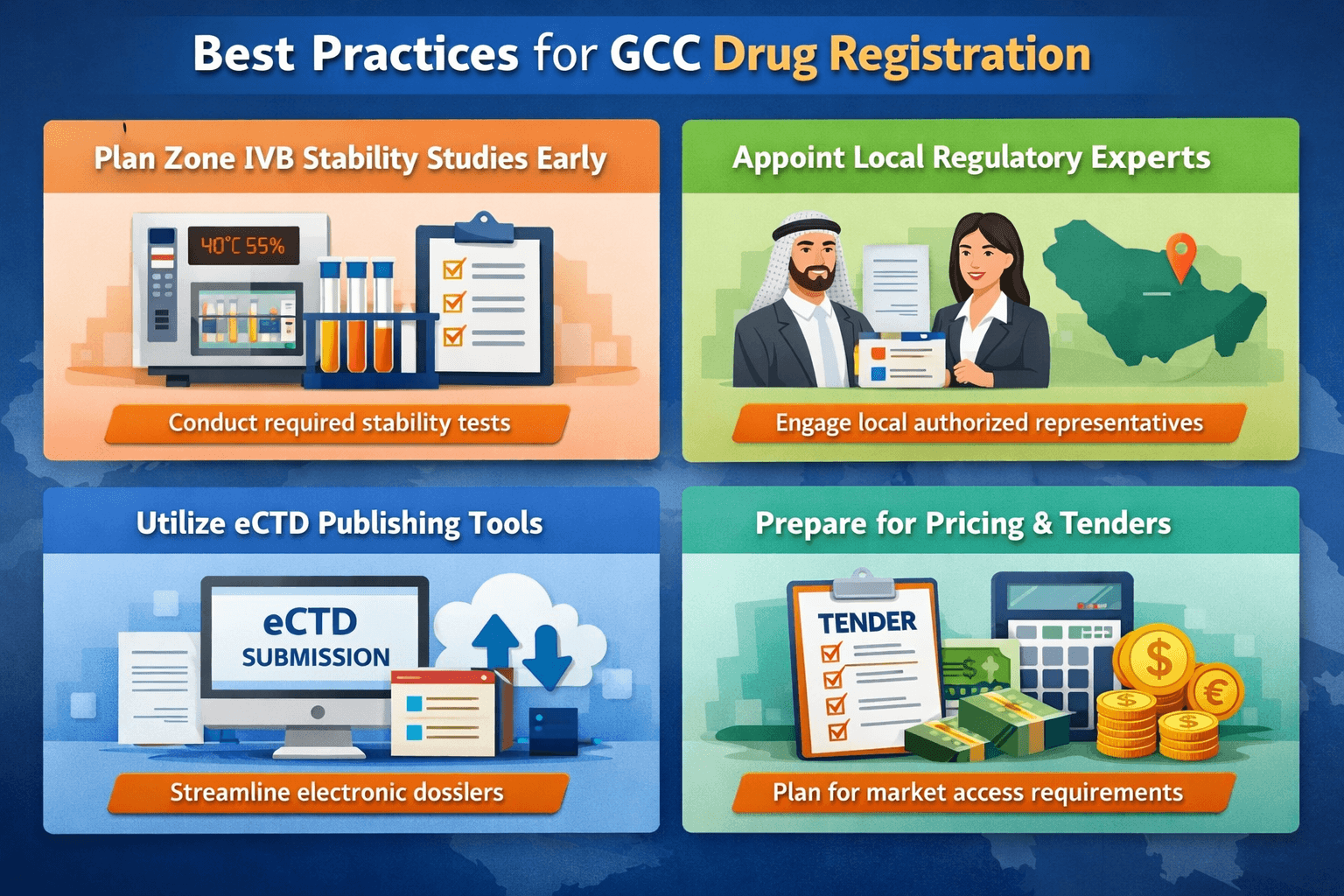
Best Practices for GCC Medicine Registration

To succeed in GCC drug registration, sponsors should:

  1. Plan Zone IVB stability studies early.
  2. Appoint local authorised representatives and PV contacts.
  3. Leverage digital publishing systems (Lorenz, EXTEDO, Veeva Vault).
  4. Prepare for pricing and tender submissions post‑approval.

Best Practices for GCC Licensing

Future Outlook for GCC Pharma Compliance

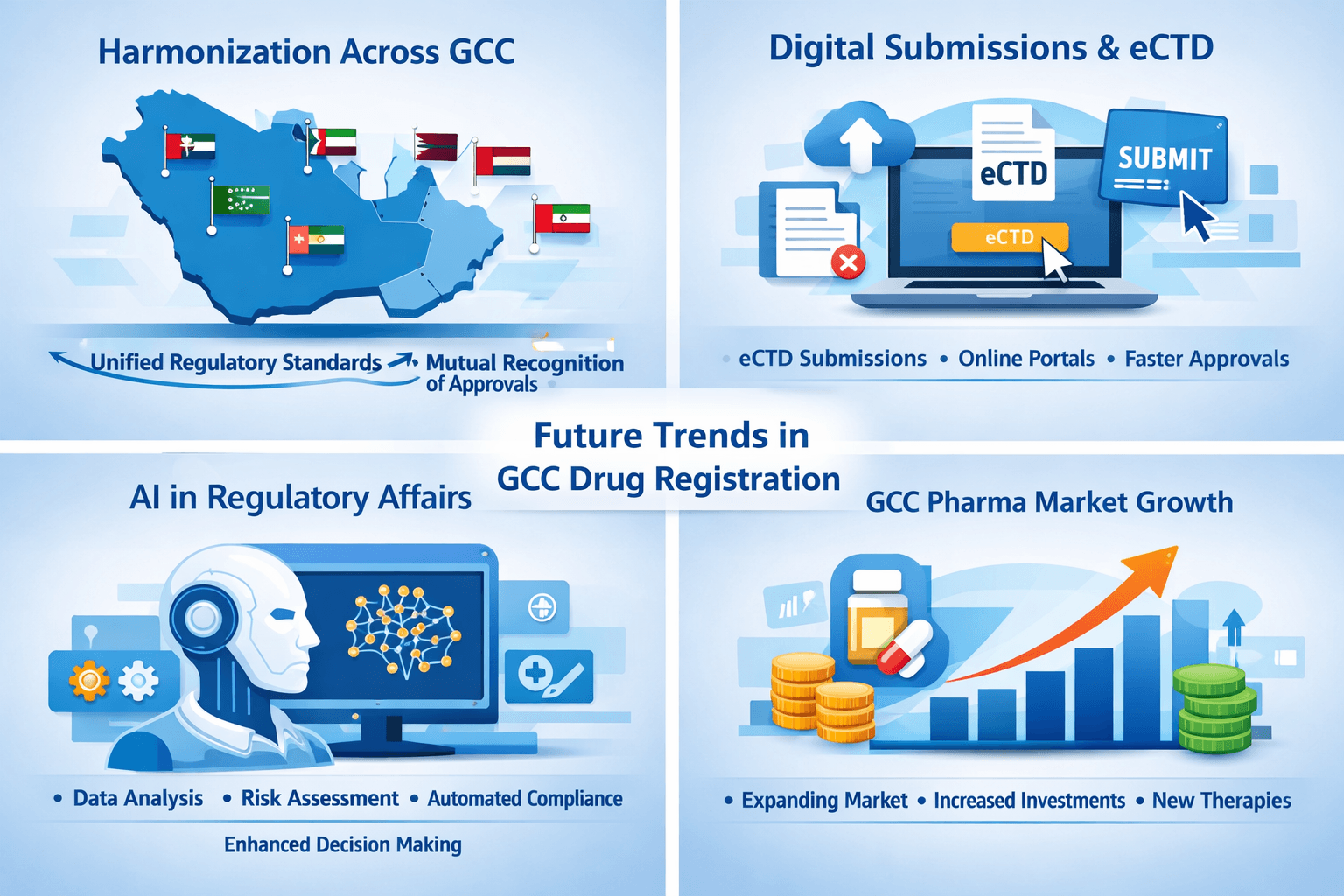
Trends include harmonization across GCC states, digital submissions, and AI‑driven regulatory intelligence. The GCC pharma market is projected to grow significantly, making GCC drug registration a strategic priority for global companies.

Future Trends in GCC Drug Registration

Conclusion

GCC drug registration requires strategic planning, robust documentation, and local expertise. Companies that anticipate challenges and leverage regulatory intelligence can achieve faster approvals and sustainable market success.

References

  1. GCC Health Council
  2. Saudi Food and Drug Authority (SFDA)
  3. UAE MOHAP
  4. WHO CTD Guidelines
  5. ICH Guidelines
  6. IQVIA GCC Pharma Market Report
  7. Deloitte GCC Healthcare Outlook
  8. PwC Middle East Pharma Insights
  9. PubMed: “Drug Regulation in GCC”
  10. GCC Central Registration Guide – GCC Health Council

Internal links: About Us | Services | Contact

Global pharmaceutical regulatory crisis 2026 supply chain map

The pharmaceutical industry faces unprecedented regulatory fragmentation in 2026.
From war-torn Ukraine to blockade-locked Gaza, collapsing systems in Sudan, US Section 232 tariffs, and the EU’s most comprehensive reform in two decades—geopolitical volatility is now a permanent operating condition for pharma companies worldwide.

At Pharma ACTD Dossiers, we specialize in preparing ACTD and CTD dossiers for the ASEAN region and beyond, helping clients navigate this complex pharmaceutical regulatory landscape.


war-pharmaceutical-supply-chain-destruction
Pharmaceutical Regulations Under Fire 2026

Table of Contents


The Current State: pharmaceutical regulatory Under Fire

🇺🇦 Ukraine: When Bureaucracy Becomes a Weapon

The war in Ukraine has inflicted a double blow on the pharmaceutical sector. While Russian missile strikes destroyed physical infrastructure—a single strike on distributor BaDM’s warehouse wiped out nearly 20% of the country’s monthly medicine stockpile—the bureaucratic aftermath has proven equally devastating.

What worked initially: At the onset of the full-scale invasion, Ukraine implemented a temporary simplified import regime that kept supply chains running without compromising drug safety or quality. No significant substandard medicines were reported during that period due to missing GMP confirmation.

The current crisis: Emergency flexibility has not been sustained. Today, overly complex GMP compliance procedures are delaying imports and creating dangerous supply gaps. According to the European Business Association, these bureaucratic hurdles—combined with lost warehouse buffers—”sharply increase the risk of interrupting therapy, especially for patients whose treatment cannot be paused—including those with cancer, cardiovascular disease, diabetes, and rare conditions with no alternative medications.”

The proposed solution: Recognize GMP certificates issued by trusted international regulators (FDA, MHRA, Swissmedic, EudraGMP) without requiring duplicative confirmation. This would align Ukraine with global pharmaceutical regulatory standards while cutting red tape that costs lives.


🇵🇸 Gaza: The Blockade of Life

In Gaza, the regulatory crisis is not complexity—it’s complete denial of access. Since January 1, 2026, Médecins Sans Frontières (MSF) has been unable to bring any medical supplies into the Strip.

The catastrophic numbers:

  • Nearly 50% of MSF’s essential medications for chronic diseases (diabetes, hypertension, asthma) are at critically low stock
  • Dressing materials for wound care are running out; during the 2025 full blockade, MSF resorted to nonsterile gauze sterilized in batches as a last resort
  • Basic surgical equipment cannot be brought in—a single malfunctioning bone drill can halt surgeries

The World Health Organization confirms severe restrictions on medical supplies entering Gaza. This is regulatory collapse by design.


🇸🇩 Sudan: The Collapse of a National Framework

Sudan presents wholesale disintegration of a national pharmaceutical regulatory system. The civil war (April 2023) has acutely impacted an already fragile pharmaceutical framework characterized by “bureaucracy, lack of harmonization with international standards, and slow approval processes.”

The current reality:

  • Local manufacturing plants sit idle
  • Imports have dwindled
  • The country has become a hub for smuggled “Boko” drugs—unregulated medicines bypassing all temperature controls and quality checks
  • Patients with chronic illnesses lack treatment as hospitals face acute shortages

The National Medicines and Poisons Board continues to meet, but its regulatory capacity is shattered. Safety and efficacy are no longer guaranteed.


🌍 Iran-US Conflict: New Front in Pharma Logistics

Though a temporary truce is in place, the Iran-US conflict has introduced fresh volatility to global pharma logistics:

  • Airlines operate around a no-fly zone
  • Strait of Hormuz closures/partial reopenings send fuel prices and air freight costs for temperature-sensitive medicines skyrocketing
  • Community Pharmacy England warns impact on medicine shortages is “very limited” now but will have “bigger impact further down the line”
  • Iran’s regulator reports war-driven drug price increases as petrochemical/steel sector damage raises production costs

🇺🇸 Trump Section 232 Tariffs: Pharmaceutical Sovereignty

April 2026: President Trump issued a proclamation under Section 232 of the Trade Expansion Act imposing a 100% ad valorem duty on certain patented pharmaceutical products and their APIs.

Stated purpose: Encourage onshoring of pharmaceutical manufacturing and promote domestic self-sufficiency.

National security rationale: “Potential global supply chain disruptions could limit Americans’ access to life-saving medications,” the proclamation states, arguing domestic manufacturing is “essential to support national defense requirements and maintain public health security during a national emergency or wartime.”

Tariff exemptions:

Scenario Tariff Rate
Approved onshoring plan 20%
Negotiating comprehensive agreement 0%
Generics/biosimilars (until reassessment) Exempt

The industry is racing to navigate this new landscape, with experts predicting global drug prices will continue rising as localization reshapes manufacturing investment patterns.


What’s Coming: The Future Regulatory Landscape

EU Pharma Package 2026: A New Regulatory Era

The European Union is enacting the most comprehensive reform of pharmaceutical legislation in over two decades. The “Pharma Package”—replacing Directive 2001/83/EC and Regulation (EC) No 726/04—has reached its final stage with formal adoption expected imminently.

Key provisions for pharmaceutical regulatory dossier preparation:

Provision Detail Impact for Companies
Shorter regulatory timelines EMA assessment reduced from 210 → 180 days; accelerated pathway: 150 days Faster market entry
New data & market protection “8+1+1+1” framework (vs. old “8+2”); extensions for new therapeutic indications, unmet medical needs Strategic planning needed
Mandatory eCTD submissions eCTD format mandatory from March 1, 2026 via CESP portal Critical for ACTD/CTD dossier services
Supply chain resilience mandates Member States can request marketing authorization holders to supply medicines; penalties for non-compliance New compliance requirements

Timeline: Regulation applicable 24 months after entry into force (~2028); Member States have 24 months to transpose Directive into national law.


Healthcare Sovereignty: The Great Reorientation

The most profound shift: rise of healthcare sovereignty. Across Asia Pacific, Europe, and North America, governments are reasserting control over how healthcare is funded, delivered, and supplied.

What this means: Governments now shape “not just how medicines are accessed, but how they are produced, evaluated and integrated within national health systems.”

Regional developments:

  • Washington: Supply chains tied to “national security, resilience, and public health” via FDA policy shifts and the BIOSECURE Act (now law, December 2025)
  • EU: Critical Medicines Act and shortage-prevention mandates advancing similar objectives
  • APAC: India and Indonesia embedding localization into industrial policy; China reinforces domestic ecosystem via volume-based procurement

Critical insight: US and EU regulators are “aligned in objective, but increasingly divergent in execution,” creating a complex dual-track compliance landscape for global companies preparing pharmaceutical regulatory dossiers.


WHO Red Book & Conflict-Specific Verification

The WHO recognized regulatory gaps specific to conflict zones. Its 2021 guidance document (“Red Book”) offers a framework for medical teams operating in armed conflicts, introducing additional verification requirements.

Growing momentum: A supplemental, conflict-oriented verification process would ensure Emergency Medical Teams (EMTs) in war zones are “appropriately trained, vetted, and accountable.”

Global pharmaceutical regulatory crisis 2026 supply chain map

Geopolitical Volatility as Permanent Operating Condition

The forecast: Geopolitical volatility is now a permanent operating condition for pharma. The hyper-globalization era (“speed and efficiency over redundancy”) is over, replaced by a “polycrisis” of expiring IP, pricing pressure, and geopolitical fragmentation.

Key risks growing:

  • Supply chain dependencies on China and India
  • Sudden pricing environment changes
  • Tariffs and sanctions
  • pharmaceutical regulatory divergence
  • Armed conflicts
  • Evolving cyber threats

2025 industry impacts: US Section 232 review, threatened 100% tariffs on branded drugs, EU pharma overhaul, Indian export-rule changes, Chinese actions targeting companies.

Industry analyst quote: “This isn’t a news cycle to react to; it’s the operating context to lead through.”


How Pharma ACTD Dossiers Prepares Clients for the pharmaceutical regulatory Future

At Pharma ACTD Dossiers, we don’t just observe these shifts—we actively prepare our clients for them. Regulatory fragmentation demands expertise, agility, and deep familiarity with multiple frameworks.

Our Core Services

We specialize in preparing ACTD and CTD dossiers for the ASEAN region and beyond:

Service Markets Covered Why It Matters Now
ACTD Dossier Preparation Thailand, Malaysia, Indonesia, Vietnam, Philippines ASEAN markets increasingly demanding local data
CTD Dossier Preparation US, EU, Canada, Japan EU Pharma Package 2026 mandates eCTD from March 2026
Country-Specific Customization India, Indonesia, APAC Healthcare sovereignty drives localization requirements
GMP Compliance Documentation Global regulators (FDA, MHRA, Swissmedic, EudraGMP) Ukraine crisis shows GMP recognition is critical
Electronic Submission (eCTD) EU CESP portal Mandatory from March 1, 2026

Why Choose Pharma ACTD Dossiers?

ASEAN expertise: As healthcare sovereignty reshapes regulatory expectations across APAC—India, Indonesia, and other markets increasingly demanding local data and domestic manufacturing contributions—our ability to navigate complex, region-specific requirements becomes ever more critical.

EU readiness: We prepare clients for mandatory eCTD submissions under the new EU framework.

Geopolitical navigation: We map pharmaceutical regulatory strategies across fragmented geopolitical landscapes, from Ukraine’s GMP challenges to US Section 232 tariffs.

Comprehensive dossier services: From understanding evolving GMP recognition standards to supply chain resilience mandates, we handle end-to-end regulatory dossier preparation.


Ready to Navigate the 2026 pharmaceutical regulatory Landscape?

Contact Pharma ACTD Dossiers today for expert ACTD and CTD dossier preparation services across ASEAN, EU, and global markets.

📧 Email: pharmaactddossiers@gmail.com
📞 Phone: +91 962-564-5858, +91 701-893-8101
🌐 Website: https://www.pharmaactddossiers.com/

VISIT OUR BLOG

FAQ: pharmaceutical regulatory Dossier Services

Q1: What is the difference between ACTD and CTD dossiers?

ACTD (ASEAN Common Technical Dossier) is a four-part structure for drug registration across ASEAN member countries (Thailand, Malaysia, Indonesia, Vietnam, Philippines):

  • Part I: Administrative Data & Product Information
  • Part II: Quality
  • Part III: Nonclinical
  • Part IV: Clinical

CTD (Common Technical Document) is a five-module international standard adopted by FDA, EMA, PMDA:

  • Module 1: Administrative (region-specific)
  • Module 2: Summaries (quality, nonclinical, clinical)
  • Module 3: Quality
  • Module 4: Nonclinical studies
  • Module 5: Clinical studies

Q2: When does eCTD submission become mandatory in the EU?

March 1, 2026—the EU Pharma Package mandates electronic submission of applications and registration dossiers in eCTD format via the CESP portal.


Q3: What is the EU Pharma Package market protection framework?

The EU restructured from “8+2” to “8+1+1+1”:

  • 8 years standard pharmaceutical regulatory data protection
  • +1 year for new therapeutic indications
  • +1 year for unmet medical needs
  • +1 year for novel active substances meeting comparator standards

Q4: How do Trump’s Section 232 tariffs affect pharmaceutical regulatory?

April 2026 proclamation: 100% ad valorem duty on certain patented pharmaceutical products and APIs, with exemptions for:

  • Companies with approved onshoring plans: 20% tariff
  • Companies negotiating comprehensive agreements: 0% tariff
  • Generics/biosimilars: Exempt until reassessment

Q5: Why is ACTD dossier preparation critical for ASEAN markets?

ASEAN countries (India, Indonesia, Thailand, Malaysia, Vietnam, Philippines) are increasingly demanding local data and domestic manufacturing contributions as healthcare sovereignty reshapes pharmaceutical regulatory expectations. Expert ACTD preparation ensures compliance with country-specific requirements.


Related Articles:

In the latest pharma news for August 2024, the pharmaceutical industry continues to see significant developments, including vaccine approvals, regulatory updates, and new funding initiatives. Here are the top stories shaping the landscape:

services

COVID-19 Vaccine Updates

Both Moderna and Pfizer have secured FDA approval for their updated COVID-19 vaccines​(FiercePharma). As new variants emerge, these adapted vaccines are expected to play a crucial role in global health strategies this fall. Governments and health agencies are stepping up efforts to boost immunization in the face of ongoing challenges.

Service of dossier In India | Pharma ACTD Dossier Service

FDA’s Rare Neurodegenerative Disease Grant Program

One of the most important pharma news stories this month is the FDA’s announcement of a new funding opportunity under the Rare Neurodegenerative Disease Grant Program​(FDA.gov). This program aims to accelerate research and clinical trials for rare diseases like ALS, offering hope for patients suffering from these debilitating conditions.

Pharmacy Deserts in Focus

Another critical issue making pharma news headlines is the rise of “pharmacy deserts” in the U.S. These areas, often in underserved urban and rural locations, are experiencing a shortage of pharmacies ​(PharmaCommerce). This trend poses serious concerns for patient access to medications, especially for those managing chronic diseases.

Epidiolex Clinical Trial Failure

Jazz Pharmaceuticals made pharma news with the disappointing results of a trial involving Epidiolex for treatment-resistant epilepsies​ (FiercePharma). While the drug has seen success in other areas, this setback highlights the complexities of treating severe neurological disorders.

Mammography Standards Update

In regulatory pharma news, the FDA will be implementing new rules under the Mammography Quality Standards Act (MQSA), effective September 2024 ​(FDA.gov). These updates aim to enhance early detection and align mammography practices with current scientific standards, ensuring improved care for patients across the U.S.

AI in Patient Support Programs

AI technology continues to make waves in pharma news, particularly in enhancing patient support and engagement​ (PharmaCommerce). Companies are integrating AI into their patient programs, resulting in better outcomes and improved medication adherence in complex therapeutic areas.

Legal and Regulatory Shifts

An ongoing topic in pharma news is the potential impact of the overturning of the Chevron doctrine, which could bring stricter judicial oversight to FDA decisions​ (FiercePharma). This change might slow down drug approvals and lead to more legal challenges within the biopharma sector.

Drug Wholesaling Remains Steady

Despite technological advancements and changes in reimbursement models, drug wholesaling remains a strong component of the pharmaceutical supply chain​(PharmaCommerce). Recent pharma news reports emphasize how wholesalers are adapting to maintain supply efficiency in an evolving market.

Leqembi Struggles in the UK

Eisai and Biogen’s Alzheimer’s treatment, Leqembi, garnered pharma news attention after it was approved in the UK, but without reimbursement​ (FiercePharma). This underscores the ongoing challenges that pharma companies face in balancing innovation with market access.

The pharma news sector remains dynamic, with companies adapting to regulatory changes, evolving market demands, and technological innovations.


Sources:

  1. Fierce Pharma, August 2024 ​(FiercePharma)
  2. FDA Newsroom, August 23, 2024​ (FDA.gov)
  3. Pharmaceutical Commerce, August 2024 ​(PharmaCommerce)